Win 01● Scale response
Body weight, active reset
90.1 kg
was 94.0 kg−3.9 kg
Proves his body responds when food, activity and routine are controlled. The 86–87 kg target was not reached.
85 kgTarget 86–8795 kg
90-Day Medical-Transformation Reset · Case Review and Programme Closure
Reset 1 July – 29 September 2026 · Coaching relationship from 19 March 2025 · Final review 8 October 2026
Proves his body responds when food, activity and routine are controlled. The 86–87 kg target was not reached.
Back under the 200 mg/dL desirable line (Sep 2025 → 23 Sep 2026). LDL and non-HDL also fell but stay above desirable.
Lipid comparisons are against September 2025, before this reset. They reflect the combined effect of nutrition, activity and adherence; no lipid medication is documented.
Response was demonstrated. Sustainability was not established. Abdul lost 3.3 kg in the first 21 days of the July reset and reached a routine low of 88.9 kg on 5 September. The lowest weight was not held: the final reading on 2 October was 90.1 kg.
His waist came down by half an inch, his belly measurement did not change, and there is no matched body-composition scan, so fat loss cannot be verified.
Recurrent diarrhea, late work, short sleep, travel, a foot injury and changing plans broke the routine repeatedly. His effort and communication were consistently high; keeping every part of the plan steady at once was the difficulty.
The programme is being concluded rather than renewed. The stomach symptoms and unresolved lab findings now need an in-person medical assessment before any further fat-loss phase.
Reset start, 1 July 2026 · 172.7 cm · age 36
Earlier coaching had twice reached the mid-80s and regained; the reset needed a result that would hold.
Lower abdomen, waist, flanks, lower back, lower chest
Central fat carries the most metabolic risk and was his main goal.
Prior CT: obstructing stone ~5×4 mm, mild hydroureter
Shaped hydration, sodium and protein limits throughout. Clearance is self-reported only.
September 2025, above range
Links to stone and joint risk; red meat and protein loading were limited.
September 2025: severe B12 and vitamin D deficiency
Both affect energy, nerves, muscle and recovery; they need physician treatment.
September 2025, above desirable
Fried food, processed meat and heavy gravies were restricted.
† From intake record: the original CT report is not in the evidence package. Earlier lab values come from the dated September 2025 laboratory report.
Started around 89.2 kg, reached about 83–83.5 kg in June 2025, regained to about 90 kg by September, dropped again to 84.5–86.2 kg, then plateaued.
A bike accident cut movement; weight returned to about 90–91 kg. Motivation dropped when results did not match effort.
Measured home meals. 94.0 → 90.7 kg; weekly averages 93.03 → 91.93 → 91.00. A foot injury from jumping jacks (pain 7/10) meant impact work stopped.
The first standardised checkpoint, taken after 3.3 kg had already gone. Waist 42 in, belly 43 in.
A 1,475 kcal five-meal plan. Weekly averages held at 90.46 – 90.62 kg. Diet fatigue and bloating appeared.
Weekly averages 91.24 → 89.35 kg. Routine low of 88.9 kg on 5 Sep; several 10,000+ step days; pain-free foot.
Watery diarrhea episodes in late August and through September, with dehydration and dizziness at the worst point. Labs drawn 23 Sep.
Final weight 90.1 kg. Full case review completed and the programme concluded with a medical handover.
† Historical weights come from earlier coaching records taken on different scales and conditions. They show direction only and are kept separate from reset-period values.
Daily weight moves with water, salt, bowel contents and illness, so weekly averages are the trend that counts. The 88.8 kg reading came during acute diarrhea and is not a true low. Late-phase points (12–30 Sep) are weekly values during repeated illness.
| Marker | 30 Apr 2025 | 23 Sep 2025 | 23 Sep 2026 | Status |
|---|---|---|---|---|
| Uric acid mg/dL | 7.9 | 8.8 | 8.3 | Follow-up |
| CRP mg/L | 1.49 | 1.64 | 22.57 | Follow-up |
| Vitamin B12 pg/mL | Not tested | <148 | <148 | Follow-up |
| 25-OH vitamin D ng/mL | 12.2 | 13.1 | 10.1 | Follow-up |
| Total cholesterol mg/dL | 198 | 216 | 195 | Achieved |
| LDL cholesterol mg/dL | Unconfirmed | 146 | 135 | Follow-up |
| Non-HDL mg/dL | 157 | 174 | 153 | Follow-up |
| Triglycerides mg/dL | 73 | 127 | 131 | Stable |
| Creatinine mg/dL | 0.94 | 0.96 | 0.95 | Stable |
| eGFR | >60 | 105 | 106 | Stable |
April and September 2025 are historical results from before the reset. September 2026 blood count was reassuring: haemoglobin 15.6 g/dL, WBC 7.6, platelets 249. CRP was drawn during an active diarrhea episode; it confirms inflammation at that time but not its cause. The April 2025 LDL value differs between records and is shown as unconfirmed.
195 mg/dL, inside the desirable range.
Pain-free by mid-September after impact work was removed and walking rebuilt gradually.
Creatinine 0.95 mg/dL and eGFR 106, reassuring.
A long-standing post-meal bowel pattern plus repeated acute episodes. No single cause is established; this needs a physician or gastroenterologist.
Repeat after recovery.
B12 still below 148 pg/mL; vitamin D fell to 10.1 ng/mL. Treatment by the physician.
8.3 mg/dL, still high.
Both improved but remain above desirable.
Not confirmed as resolved: no repeat imaging on file.
Yohimbine and capsinoids were named; CLA was reported. Doses and dates are incomplete. A contribution to the stomach symptoms cannot be ruled out, but symptoms began before and continued after them. Any decision about medicines rests with the treating physician.
The pattern recurred four times after the bowel issue was first monitored in mid-August, and the client said the post-meal pattern "had been long". Each episode paused training and the normal plan.
| Domain | Before | After | Status |
|---|---|---|---|
| Weight | 94.0 kg, 1 Jul | 90.1 kg, 2 Oct | Achieved |
| Target weight | 86–87 kg goal | Not reached | Follow-up |
| Waist | 42 in (21 Jul) | 41.5 in (11 Sep) | Achieved |
| Belly | 43 in (21 Jul) | 43 in (11 Sep) | Stable |
| Body composition | No scan | No scan; not verified | Follow-up |
| Upper body | Shoulder and arm base | Visually preserved | Stable |
| Foot | Pain 7/10, limp | Pain-free | Achieved |
| Daily steps | ~6,780/day (Jul) | Several 10k+ days; still variable | Stable |
| Nutrition habits | Restrictive history, rebound | Better portion awareness; timing still irregular | Stable |
| Sleep | Late work, 4–6 h nights | Unchanged | Follow-up |
| Gut health | Post-meal bowel pattern | Recurrent acute diarrhea | Follow-up |
Weight before is the reset start; waist and belly before is the first standardised checkpoint on 21 July, taken after 3.3 kg had already been lost.
All body photographs in this report have been reproduced from the original submitted files without retouching, body modification, generative editing, background replacement or visual enhancement. Each photo is shown in full, uncropped.
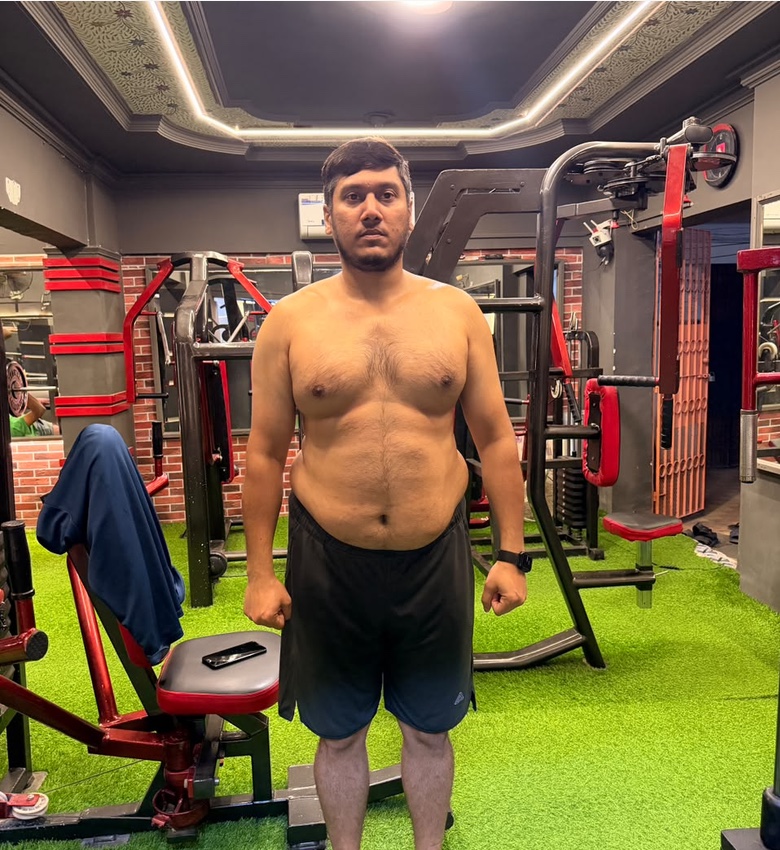
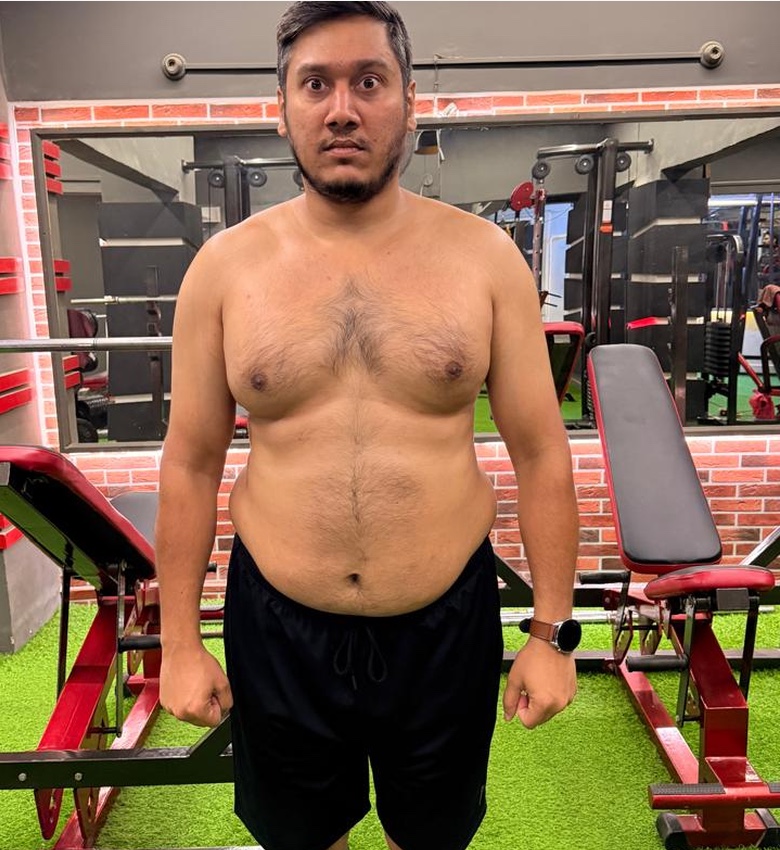
What it shows. The frame looks slightly smaller and the upper waist modestly tighter. Shoulder and arm mass look reasonably preserved. The lower abdomen and lower chest are still clearly present. The September photo is taken closer, so the change should not be overstated.
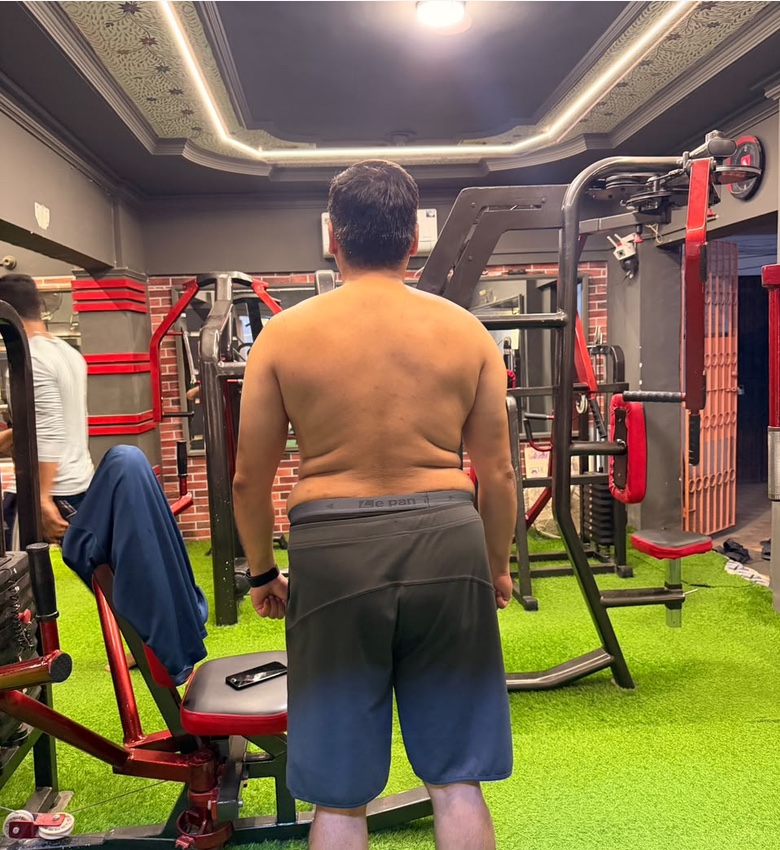
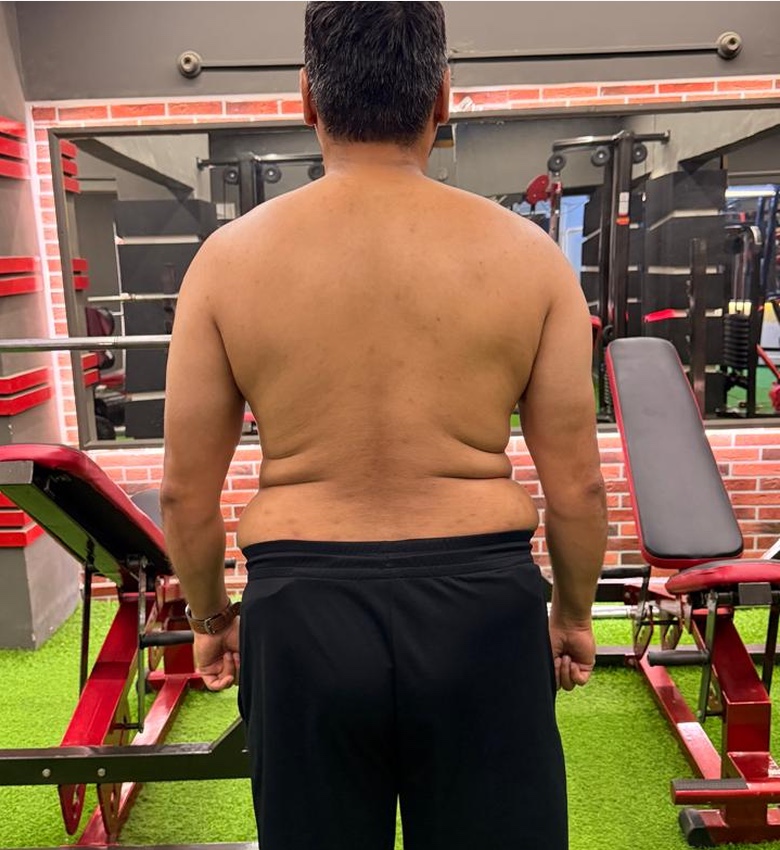
What it shows. The upper waist and flanks look modestly tighter, and the shoulder and back frame stays visible. Lower-back fat remains significant.
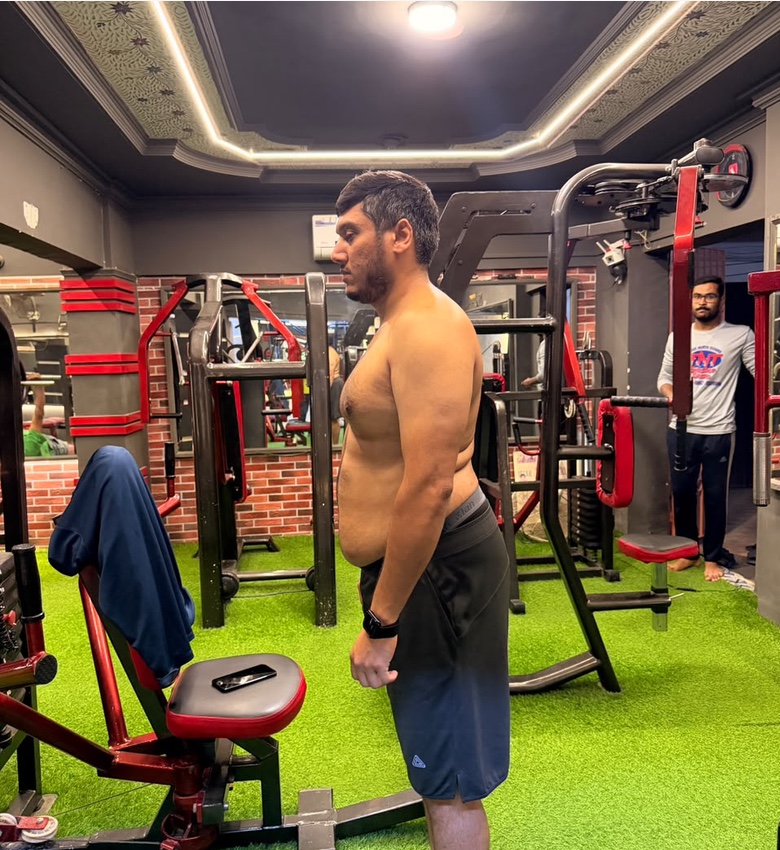
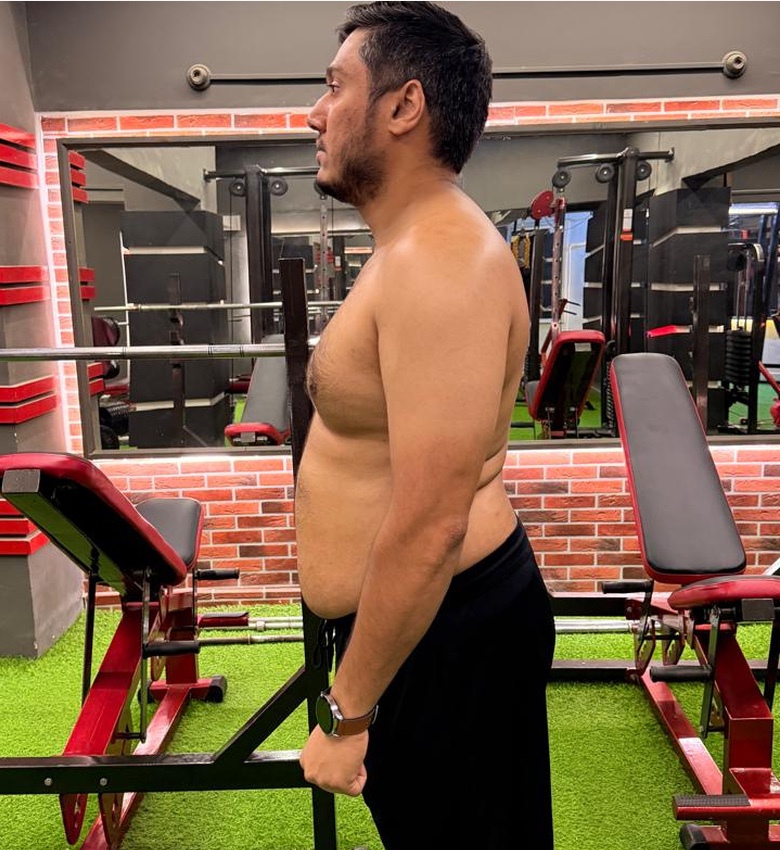
What it shows. Abdominal depth is only slightly reduced and the lower abdomen still projects forward. Posture and how relaxed the abdomen is change the appearance.
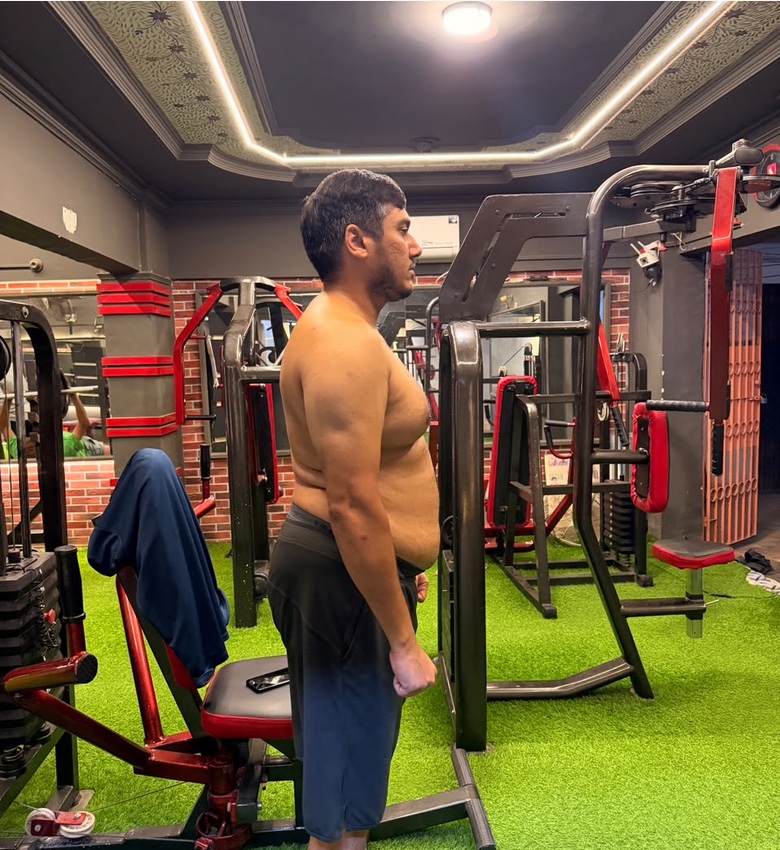
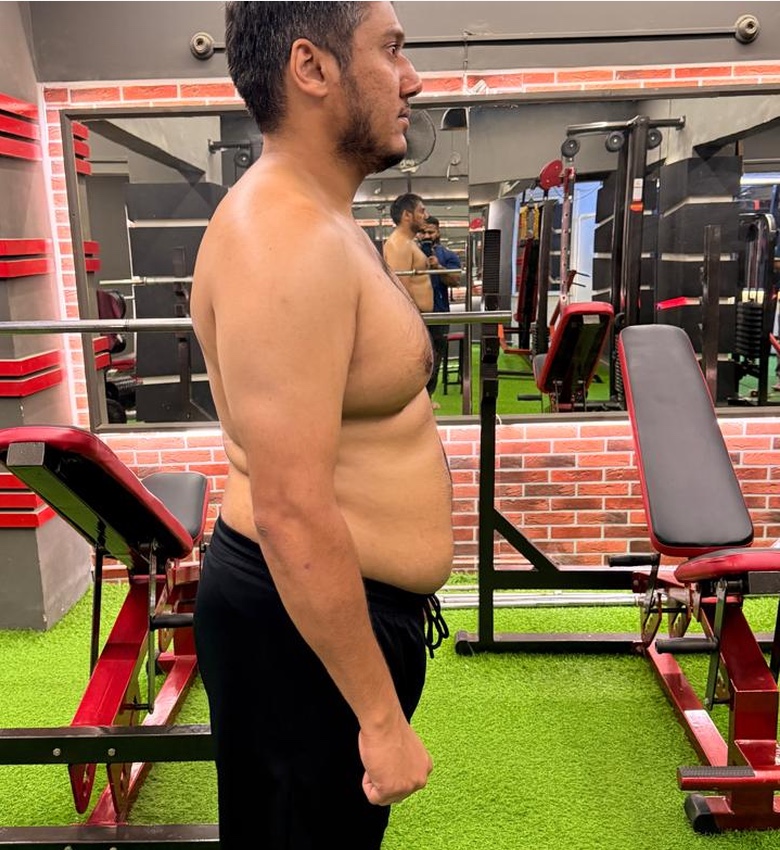
What it shows. Slightly tighter through the upper waist, but central fat remains the dominant feature. Stance, waistband height and camera distance differ between the two photos.
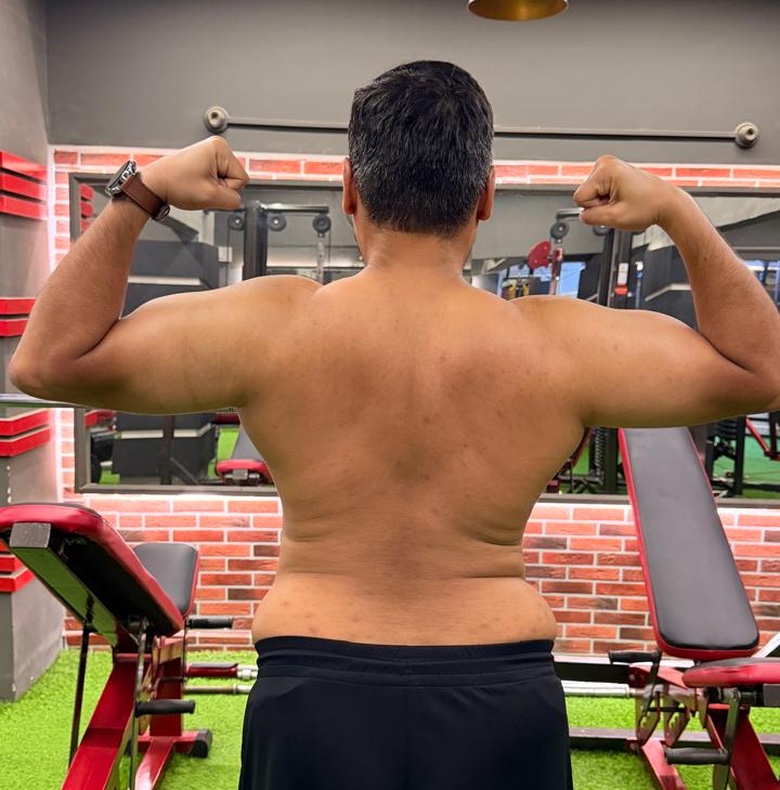

What it shows. A useful shoulder, arm and upper-back base to protect during any future fat loss. These are not before-and-after evidence, because the July photos were relaxed poses.
Modest progress is visible; a transformation-level change is not. There are no standardised photos from 1 July. Camera distance, lighting, posture, waistband height and breathing differ between dates. Body-fat percentage and fat or muscle change cannot be judged from photos.
See a general physician, and a gastroenterologist where appropriate.
At least two symptom-free weeks before any new calorie deficit.
One moderate plan held for 8–12 weeks.
Abdul, you achieved genuine progress: 3.3 kg in the first three weeks, a routine low in the 89 kg range, a smaller waist, better cholesterol and a pain-free foot. You stayed engaged and honest throughout. The final outcome did not become the lasting change in body composition we aimed for, and repeated stomach illness, late work, short sleep and travel kept breaking the routine.
The responsible next step is an in-person medical and gastrointestinal assessment, not another similar phase. This is a clinical closure, not a judgement of your effort. You will receive a complete handover so your next physician or coach starts from accurate data.